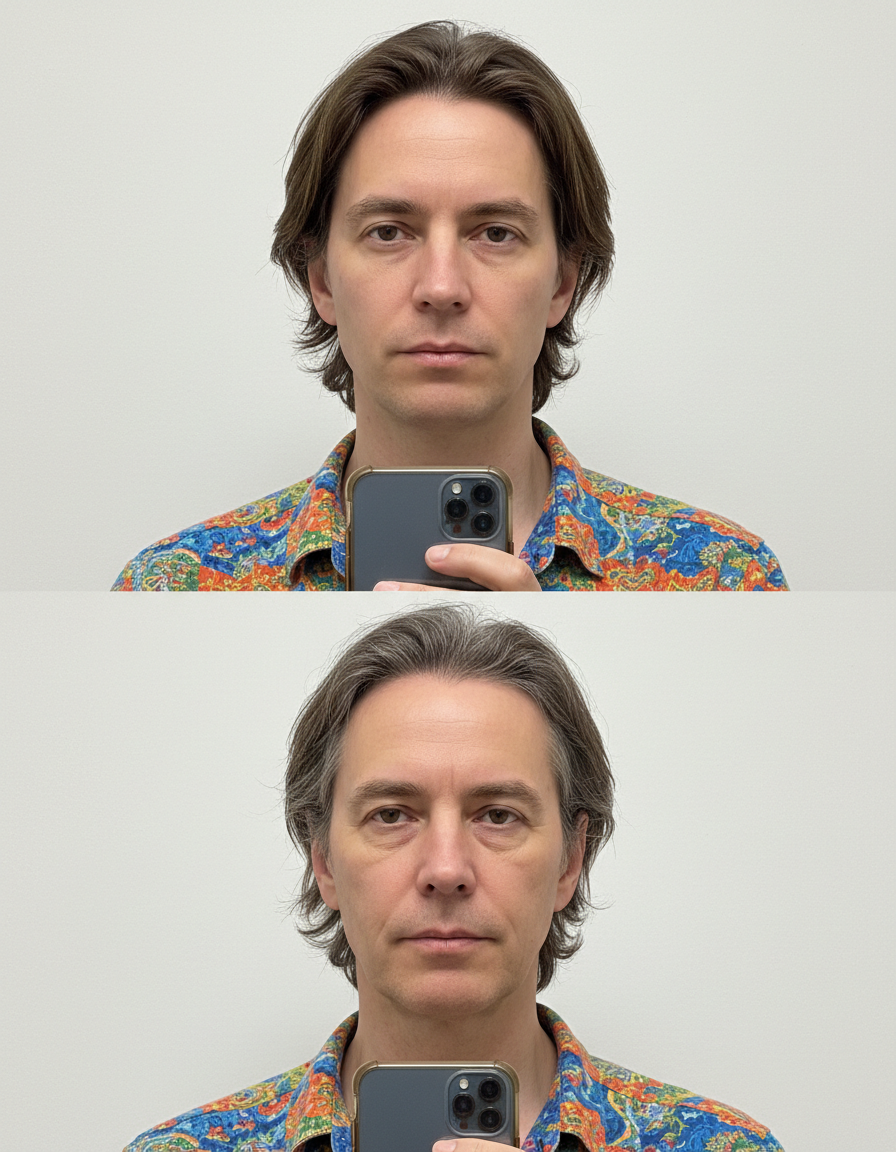
Face Expression Changer
Adjust the expression in a photo. Pick a style, choose a model, and download the result at full resolution with no watermark.
Pick a style on the left, then hit Apply. Your original stays untouched — you always see both.
How to use Face Expression Changer
Upload the photo
Any JPG, PNG or WEBP. The more resolution the original has, the more the retouch has to work with — detail cannot be invented from a heavily compressed file.
Choose the fix
Pick the correction you need, or describe it in a sentence. Being specific about what to change, and what to leave alone, is most of the skill.
Compare, then download
Check the original against the result at full size before you commit. Download is full resolution, no watermark.
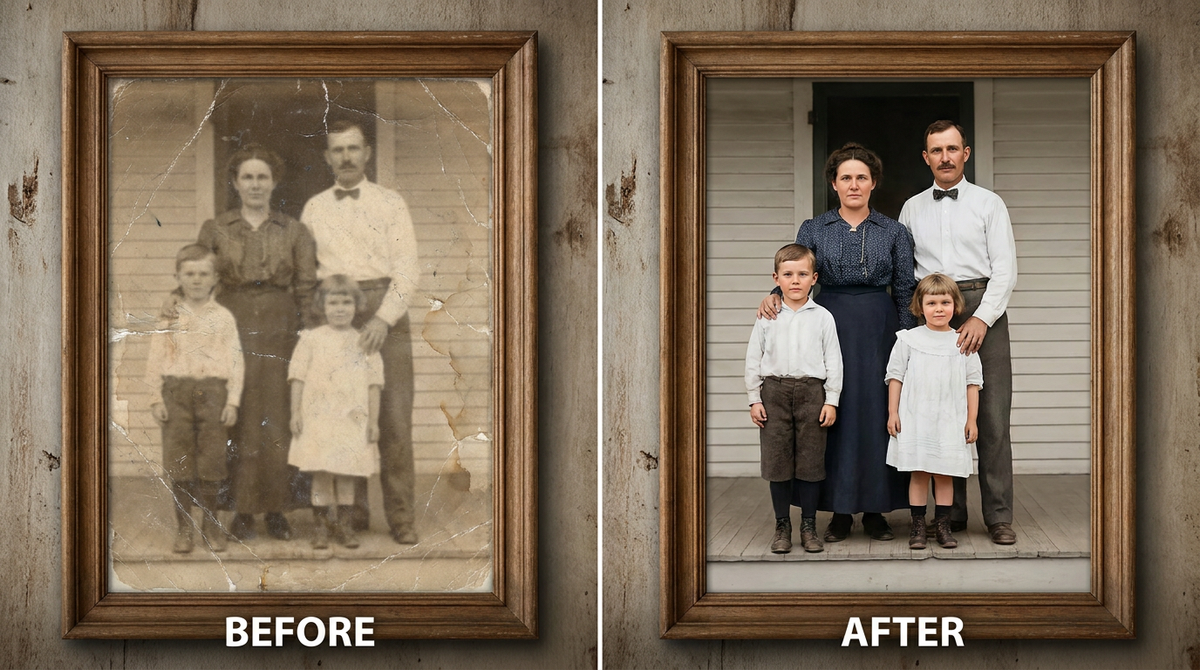
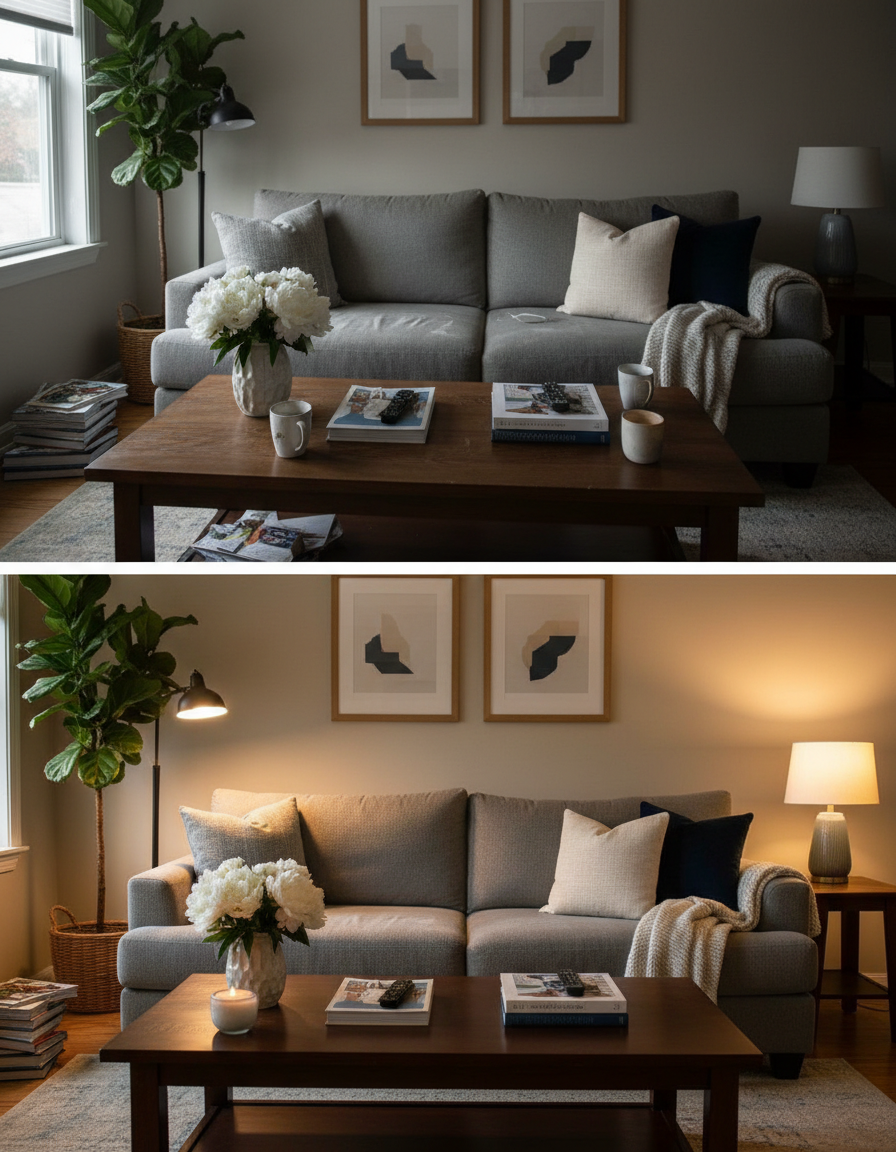
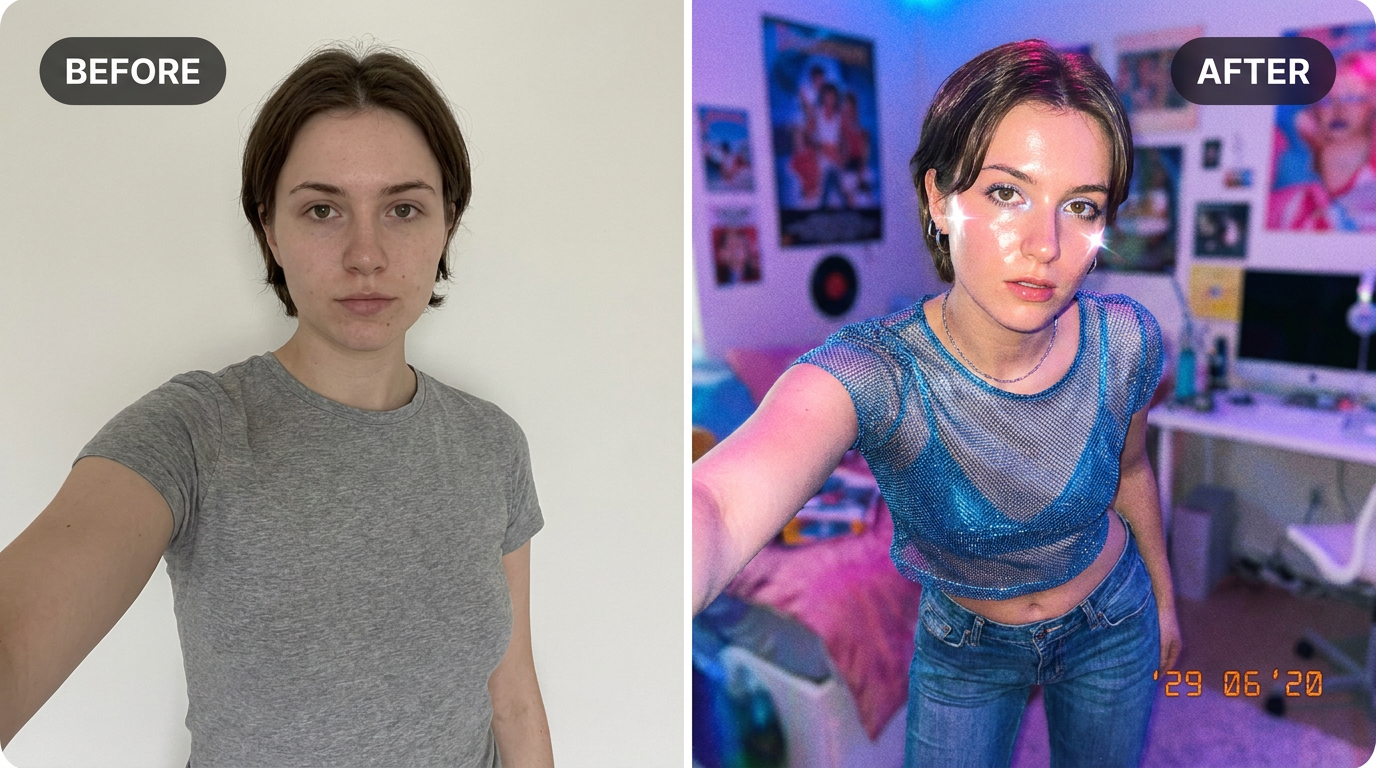
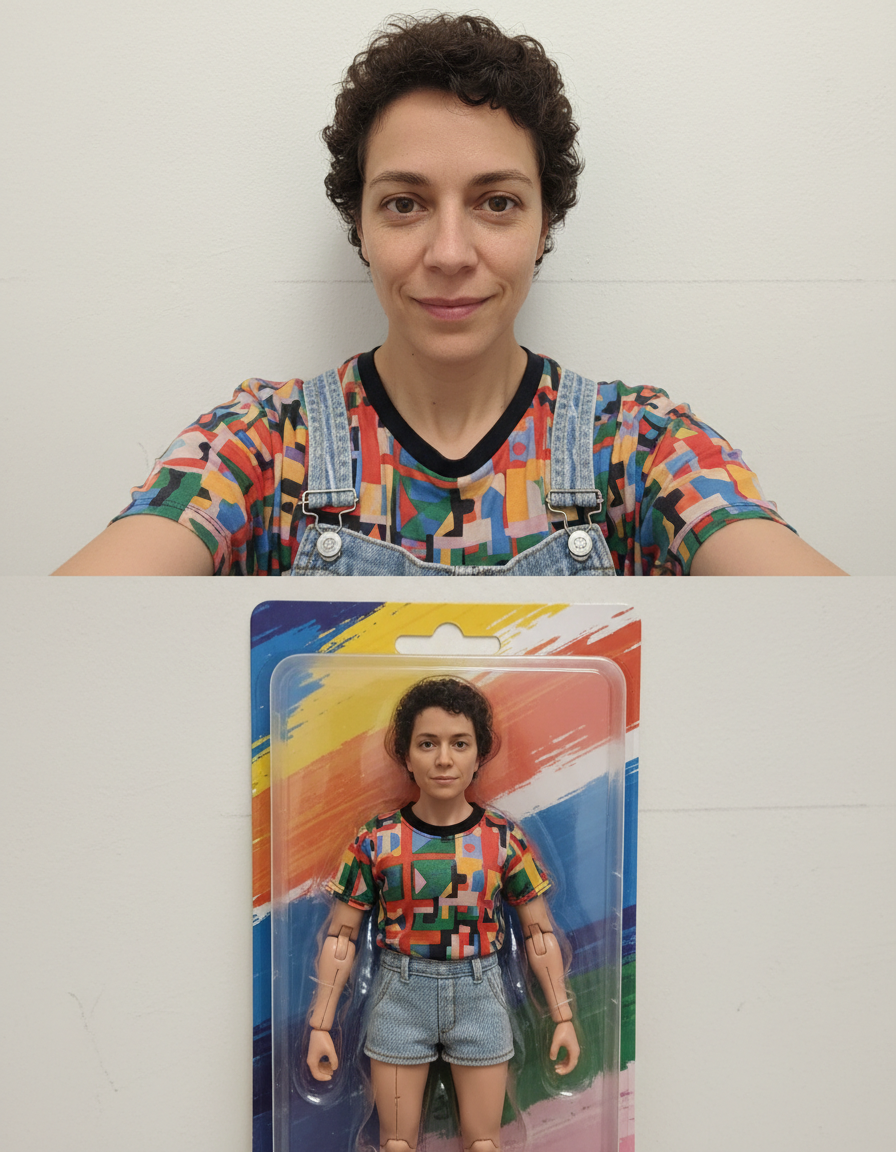
See it in action — real before & after

Why use Face Expression Changer
What Face Expression Changer does
Adjust the expression in a photo.
Full resolution out
The download is not a downscaled preview. It goes straight into a print, a listing or a profile.
Reversible, because you keep the original
Nothing is overwritten. If a correction goes too far, the original is still on your device.
Skin texture survives
Pores, fine lines and natural variation are kept. The plastic look comes from tools that treat skin as a surface to blur; this one treats it as skin.
Identity untouched
Nothing about bone structure, eye shape, nose or jawline is reshaped. The photo is corrected, not the person in it.
Fixes what the camera got wrong
Colour casts, uneven exposure, flash shine, red eye, harsh shadow — the failures of the room and the lens rather than of the subject.
What Face Expression Changer changes
Adjust the facial expression as specified, moving the mouth, cheeks and eyes together the way real facial muscles do, so the change reads as genuine rather than pasted on.
Your face, bone structure and skin tone are held fixed on every generation — only what is described above is changed. Add your own brief in the Custom tab to take it further.
Face Expression Changer for the fixes that actually come up
Most retouching is a handful of recurring problems. Each one has a specific fix rather than a general "enhance" slider.
Portraits and profile photos
Temporary blemishes, shine, stray hair and flash red-eye — the four things that stop an otherwise good photo of a person being usable.
Colour and exposure correction
Fluorescent green, tungsten orange, a flat grey day. Getting the white balance right fixes photos people assume are unfixable.
Event and group photos
One consistent pass across a whole set, so the album reads as a single shoot.
Product and listing photos
Dust, fingerprints, glare and colour accuracy, which is what marketplace returns are usually argued over.
Key highlights of Face Expression Changer
Benefits
Seconds instead of a session in an editor
The routine pass that makes a photo presentable, without the software or the hour.
No plastic-skin look
The most common complaint about automatic retouching, and the specific thing the defaults are tuned against.
Cheap enough for a whole set
A pack starts at $2, so fixing every photo from an event is realistic rather than something you do to one and give up on.
Nothing to install
Runs in the browser, on a phone as readily as a laptop.
Predictable results
A named fix does the named thing. There is no single mystery "enhance" button doing five things at once.
What people use it for
What it is mainly used for
Adjust the expression in a photo. Pick a style, choose a model, and download the result at full resolution with no watermark.
A profile photo with one distracting spot
The single most common reason a good photo of someone goes unused.
Indoor photos with a colour cast
Office and restaurant lighting turns skin green or orange. Correcting the white balance rescues photos people had written off.
Flash portraits
Direct flash produces shine, harsh shadow behind the head and red eye, all at once.
Marketplace listings
Clean, colour-accurate product photos convert better and get disputed less.
Prompt ideas
Name the specific problem and, just as importantly, say what to leave alone. Retouching prompts fail by being too broad — "make it better" invites the model to change things you were happy with.
Say what to preserve
"Keep skin texture and pores" is the single most useful phrase in a retouching prompt.
Fix light and colour separately
"Correct the green fluorescent cast" and "lift the shadow on the right side" are two different jobs; asking for both at once gives you a compromise.
Be explicit about limits
"Do not change face shape, do not slim anything, do not whiten teeth" prevents the drift towards a generic beauty look.
Point at the area
Left, right, background, foreground, upper third. A location narrows the edit enormously.
Ask for realism
"Keep it looking like an unretouched photograph" pulls the result back when a style is creeping in.
Handle noise carefully
"Reduce noise but keep fine detail in the hair and fabric" avoids the smeared look of aggressive denoising.
More about Face Expression Changer
Upload the photo, pick what needs fixing, and download. Each pass costs 2 credits from a one-time pack, which means fixing a set of photos one at a time is affordable rather than a project.
Retouching has a reputation problem, and it is deserved — most automatic tools smooth skin into plastic and call it enhancement. Face Expression Changer is built on the opposite assumption: the best retouch is the one nobody can point at.
Almost every photo that gets deleted is technically fixable. A colour cast from office lighting, a shine across the forehead from a flash, one temporary blemish the eye goes straight to. None of those are problems with the subject; they are problems with the room, and rooms are fixable.
Getting the best result from Face Expression Changer
- If the result looks smoothed, say so explicitly in the next run and ask for less.
- Keep the original. Retouching from an already-retouched file compounds the artefacts.
- Do not expect detail to appear that the camera never recorded; a blurred photo can be sharpened, not reconstructed.
- For documentation photos, match the light between frames rather than perfecting either one alone.
- Start from the largest, least compressed original you have — a screenshot of a photo has already lost detail that cannot be recovered.
- Soft, even light in the source photo gives the best result almost regardless of what you are generating.
- Judge every result at full size, not zoomed out. Problems hide at small sizes.
- Generate two or three times before deciding. Results vary between runs, and the first is not reliably the best.
It's free to try and runs online — nothing to install. Explore the rest of our AI Creative Apps, or open the full AI photo editor for more control.